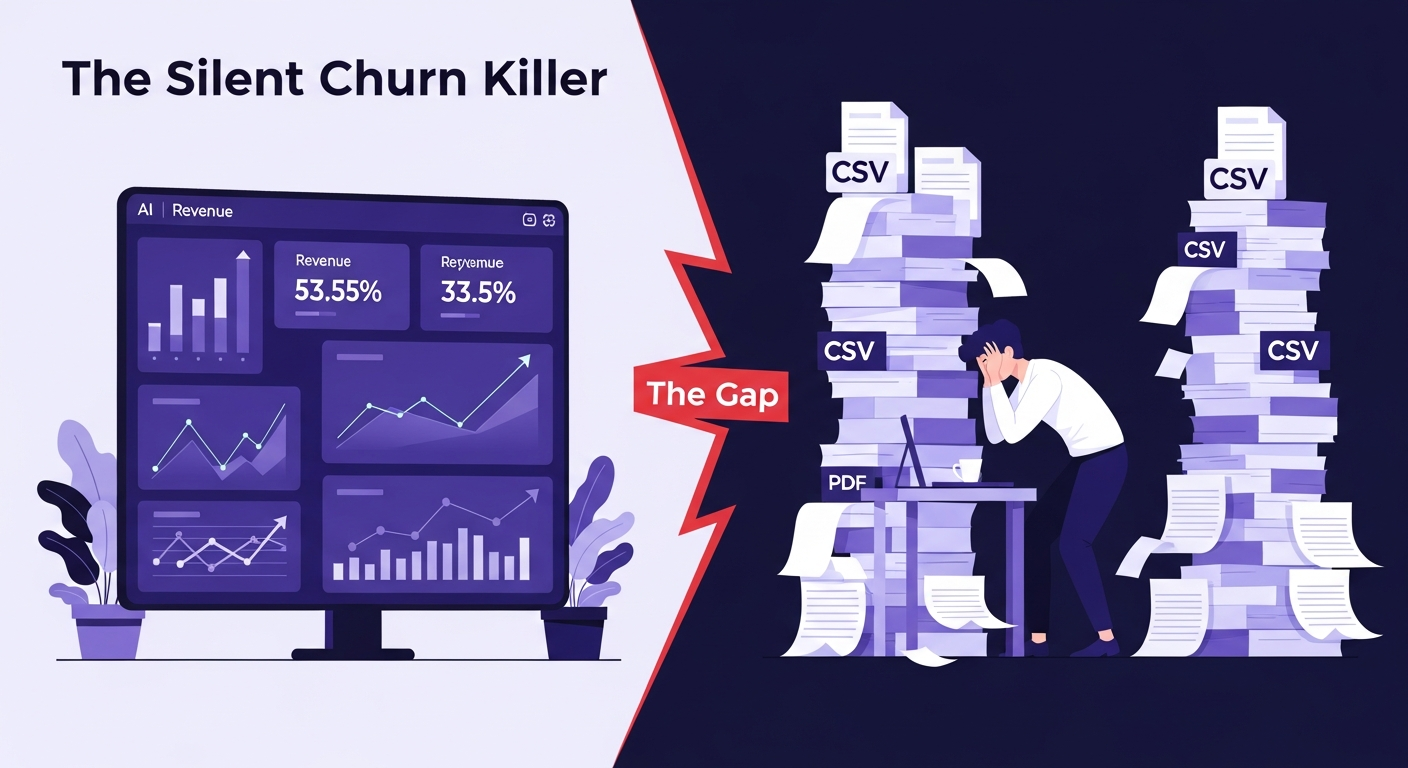
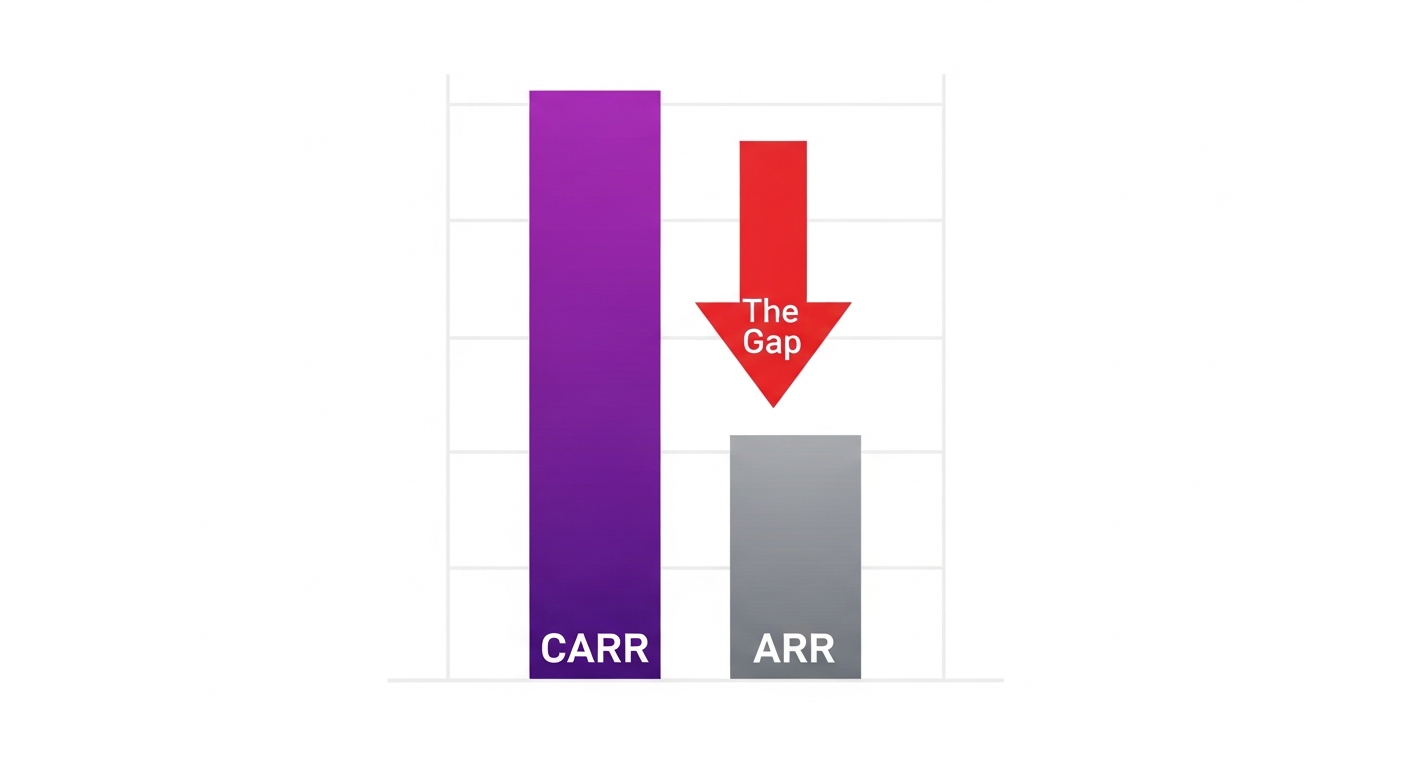
In the high-stakes world of AI-native SaaS, there is a quiet, lethal metric that separates the winners from the companies struggling to stay afloat: the widening divergence between Contracted ARR (CARR) and actual, realized ARR.
You've signed the deal. Your sales team has celebrated a win. Your CARR looks fantastic on the internal dashboard. But out in the real world, your new customer is stuck in an implementation black hole. They are waiting for value, and your team is stuck in the trenches, playing the role of "data janitor."
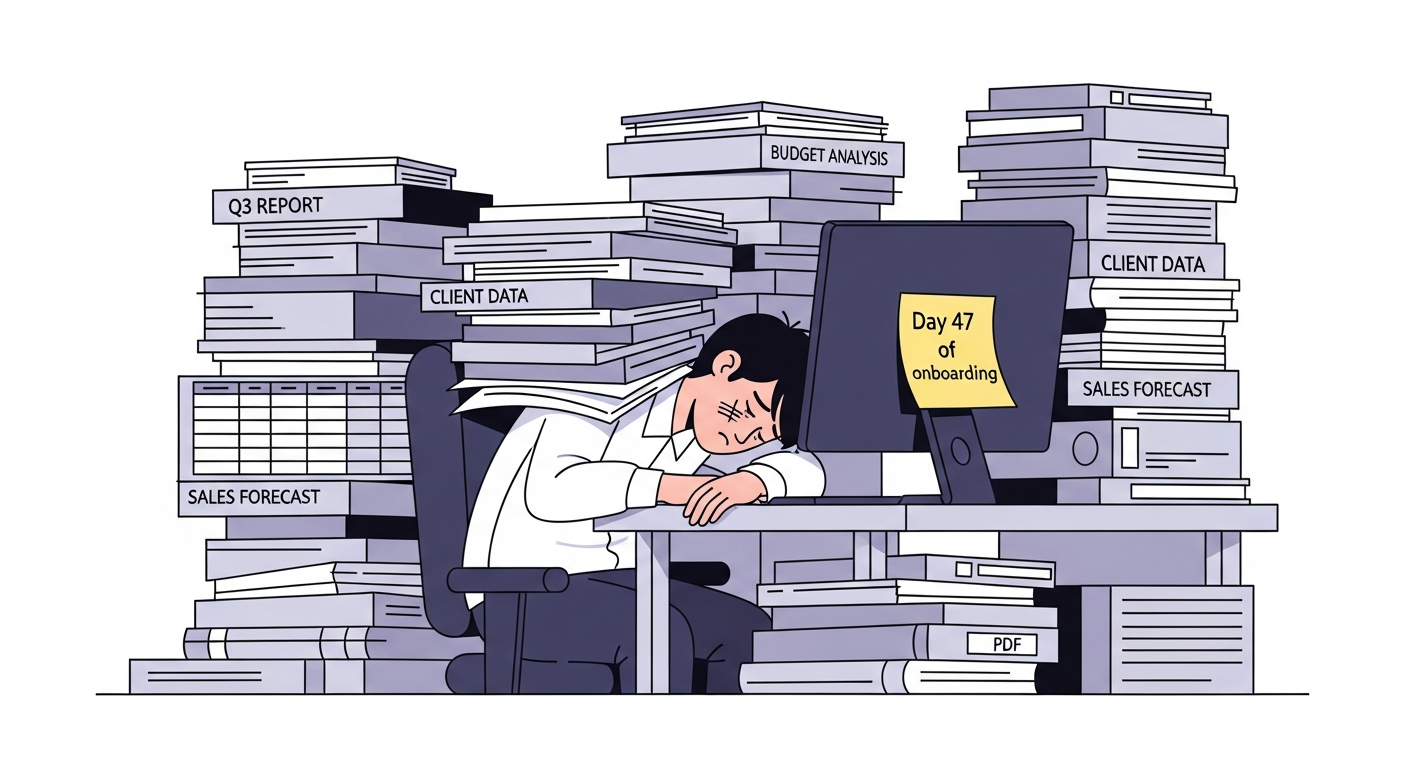
It is a painful irony: you are building the future with cutting-edge AI, but your onboarding process is being held together by manual spreadsheet mapping, custom Python scripts, and an army of Implementation Managers acting as human middleware.
The "Elbow Grease" Trap
Most SaaS leaders assume that if a customer is stuck in onboarding, they just need "more hands on deck." So, they throw more implementation hours at the problem. They task their most expensive, highly skilled Implementation Managers and CS leads to manually clean, format, and parse the customer's messy legacy data just to get it into the system.
This "elbow grease" strategy is exactly why your AI company is losing customers. When you rely on manual labor to bridge the gap between a customer's raw data and your AI's intake, you introduce three critical points of failure:
- The Credibility Gap: You sold them an automated, intelligent AI solution. But their first weeks involve emailing your team back and forth about column headers and file formats. The "magic" of your AI is replaced by the bureaucracy of data janitorial work. The customer starts to suspect that your AI is just manual labor in a trench coat.
- The "Experiment" Death Zone: AI investments are often bought as "pilot programs." These initiatives are under the microscope. If your internal team takes weeks to get the data clean enough for the AI to "see" it, the buyer's internal interest evaporates. By the time you finally deliver that first insight, the business case for the pilot has already been marked for cancellation.
- The Scalability Wall: If you have to scale your Implementation team linearly with your customer count, your margins are effectively dead. You aren't building a software company; you're building a bespoke data-processing service.
The Engineering Sinkhole
When the manual cleaning becomes too much, the natural reflex for many AI companies is to go to the engineering team and ask for a "quick custom uploader."
This is a trap.
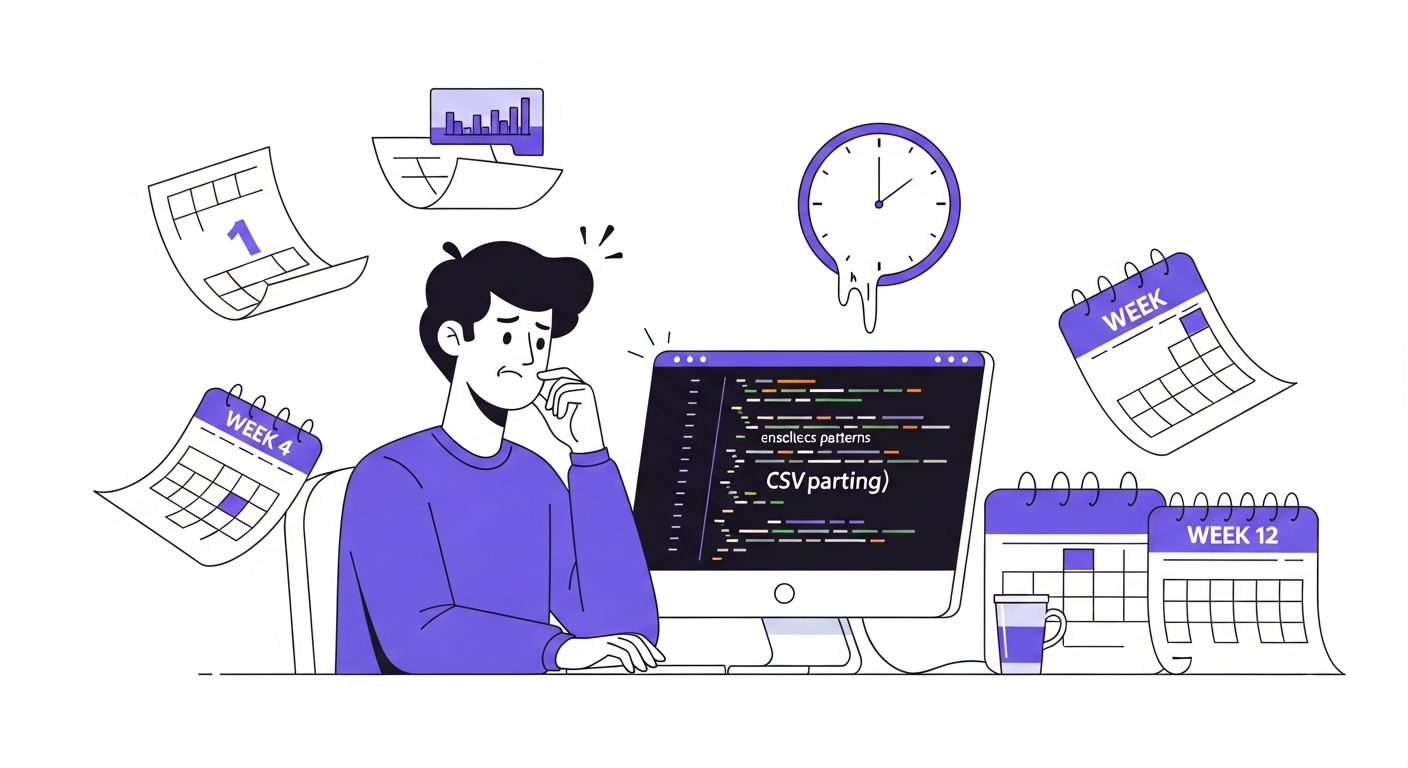
Engineering leads often underestimate the sheer volatility of client-side data. You assign a senior developer to build a CSV parser for a client, thinking it's a "one-week project." Three months later, that engineer is still spending 20% of their sprint cycle fixing edge cases, handling weirdly formatted headers, and patching bugs because a client decided to change their ERP system or added a new column to their export.
Even worse, the data isn't always nice, flat, machine-readable spreadsheets. It's PDFs. It's scanned invoices. It's shipping manifests and blurry images of receipts. Trying to build a homegrown system to handle the unstructured chaos of real-world documents is a massive distraction. Every hour your engineers spend writing regex to parse a messy PDF is an hour they aren't spending on your core AI model, your product roadmap, or your competitive edge.
The Hidden Churn Factor
This friction creates a hidden churn factor that never shows up on an exit survey.
When your CS team is bogged down in data janitorial work, they aren't actually serving the customer. They aren't training them on new features, they aren't identifying expansion opportunities, and they certainly aren't nurturing that pilot into a full-scale enterprise rollout. They are just trying to get the files to upload without crashing the system.
Customers who endure a long, painful data migration carry the memory of that friction throughout the entire lifecycle of the product. They associate your brand with administrative headaches rather than strategic value. When the renewal date arrives, the decision isn't based on the power of your AI — it's based on the memory of the "onboarding nightmare."
If you are seeing a massive gap between what you sold (CARR) and what you are actually collecting (ARR), stop blaming the sales cycle. Look at the data ingestion pipeline. If your best people are spending their days fighting with PDFs and formatting CSVs instead of driving customer success, you aren't just losing time — you're bleeding revenue.
To stop the churn and close the gap between your ARR and your potential, you need to stop the janitorial work. Elvity replaces the manual, engineering-heavy burden of data processing with an automated, AI-driven ingestion platform, allowing your implementation team to stop acting like data janitors and start acting like strategic partners — shrinking your Time-to-Value from months to days.